North & North · Peptide Catalog
BPC-157
Body Protective Compound
Your stomach makes a protein known for protecting tissue. BPC-157 is the small piece of it researchers pulled out, and have been studying ever since.
The short version
What BPC-157 actually is
That piece is fifteen amino acids long, and researchers have spent decades asking what it does. The work spans animal models of tendon, ligament, blood vessel and gut repair, and it has built one of the deepest published records of any peptide this size.
Sold for research purposes only.
The mechanism
How BPC-157 Works
It does not behave like a switch. It behaves like something that turns up where repair is already happening.
The honest answer is that nobody has pinned it to a single receptor. The leading idea is that BPC-157 acts less like a switch and more like a dispatcher, nudging growth factor signaling and blood vessel response that are already in motion. That would explain the strangest thing about the research: activity keeps surfacing across tendon, muscle, vascular and gut models instead of concentrating in one place. Compounds with one dedicated target rarely behave that way.
Where the science stands
Key Research Areas
- 01
Tendon and ligament repair
The headline, and why orthopedic sports medicine keeps circling back. Studies track whether tendon cells migrate into a damaged gap, survive the stress there, and rebuild collagen in an organized way.
- 02
Blood supply
Repair needs plumbing. Tissue only rebuilds if blood reaches it, so much of this work follows new vessel formation, and specifically VEGFR2, the receptor a cell uses to start building one.
- 03
Muscle
The same repair question asked of a different tissue. Published work covers all three kinds of muscle, the skeletal muscle you train, the smooth muscle lining your organs, and heart muscle.
- 04
Where it started
First characterised in gastric and intestinal models, which is why it carries the name of a protective stomach protein rather than a mechanism.
The evidence
What the Research Actually Did
The interesting one. A placebo controlled trial in people is recruiting right now: 120 participants with MRI confirmed hamstring strains, half on BPC-157, half on placebo, nobody told which. Results are not in yet.
Hudson Biotech. Phase 2 trial in acute grade II hamstring strain, recruiting since February 2026. NCT07437547.The newest map of the field. A March 2026 review of how BPC-157 behaves across muscle, tendon, ligament, bone and gut, and the mechanisms researchers think sit underneath all of it.
From Regeneration to Analgesia: The Role of BPC-157 in Tissue Repair. Int J Mol Sci, March 2026.Gathered every orthopedic and sports medicine study on it into one place, then graded how strong that evidence actually is.
Emerging Use of BPC-157 in Orthopaedic Sports Medicine: A Systematic Review, 2025.
We pulled this together from published work and linked every source, so you never have to take our word for it. Nothing here is a claim about what these compounds do. We would rather you read the sources than trust the summary.
Quality and supply
BPC-157 Specifications
- Product contents
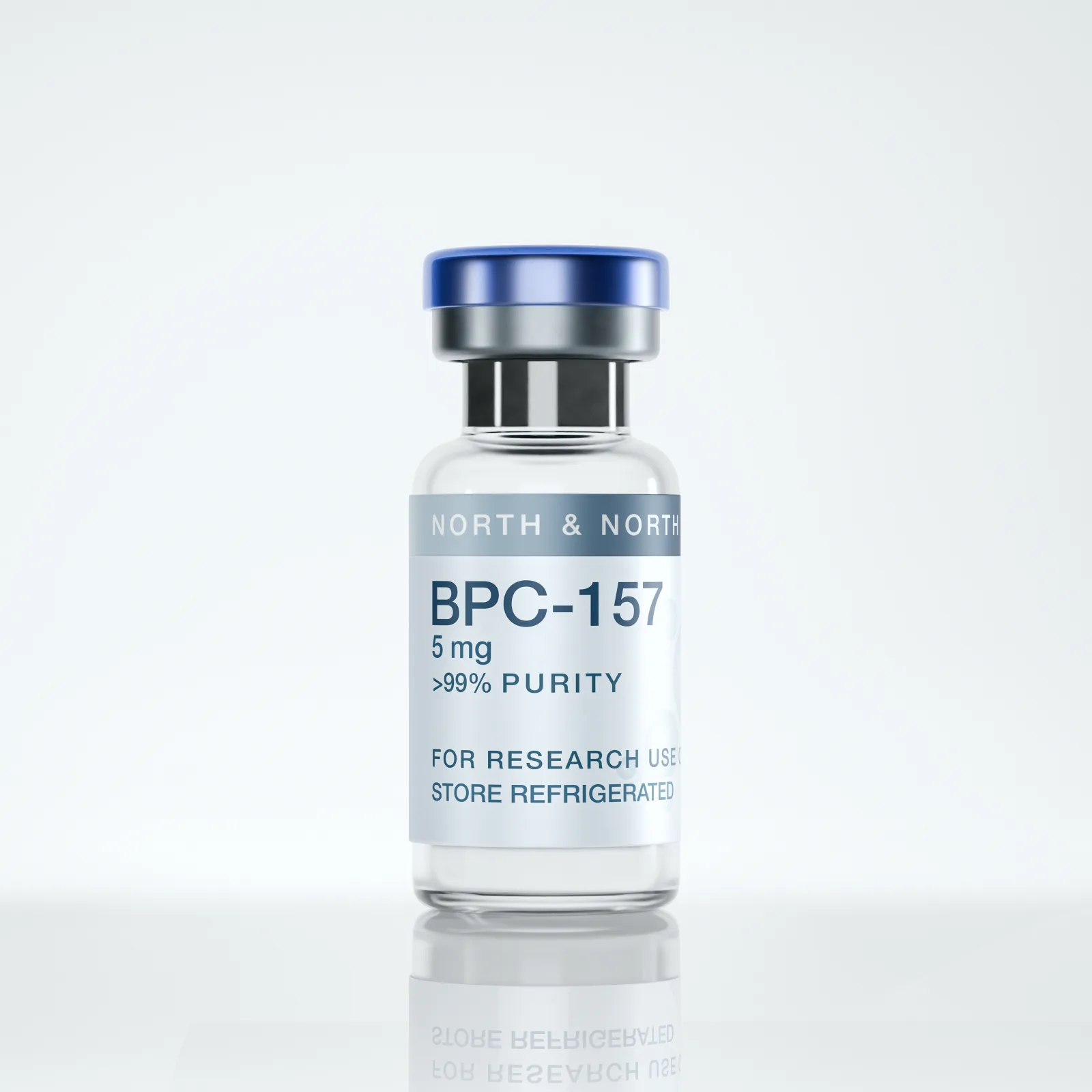
- BPC-157 lyophilized powder in 3mL vial
- Available size
- 5mg
- Peptide type
- Body Protective Compound. Synthetic pentadecapeptide, 15 amino acids
- Purity
- >99% Purity · HPLC
- Storage
- Store at 6°C or below, sealed, away from heat, light, and moisture
- Solubility
- Soluble in water
- Fulfillment
- USA domestic fulfillment
- Molecular formula
- C62H98N16O22
- Molecular weight
- 1419.56 g/mol
- Sequence
- Gly-Glu-Pro-Pro-Pro-Gly-Lys-Pro-Ala-Asp-Asp-Ala-Gly-Leu-Val
- CAS number
- 137525-51-0
- PubChem CID
- 9941957
- Appearance
- White to off white lyophilized powder in sterile glass vial
Common questions
Questions People Ask
What is BPC-157?
A fifteen amino acid peptide based on a protective protein found in the stomach. Most of the published research sits in tendon, ligament and muscle repair. Sold for research purposes only.
What does >99% purity actually mean?
It means that in analytical testing, more than 99% of what is in the vial is the peptide itself, rather than fragments, residues or byproducts left behind by synthesis. Purity is verified by HPLC.
How is BPC-157 different from TB-500?
Overlapping territory, different molecules. BPC-157 comes from a stomach protein and most of its research concentrates on tendon, ligament and gut repair. TB-500 is synthetic Thymosin Beta-4 and concentrates on how cells rebuild their internal scaffolding. A 2026 study put the two head to head on Achilles tendon healing.
How should it be stored?
Sealed, at 6°C or below, away from heat, light and moisture. It ships as a lyophilized powder, which is the stable form.
Why do I need an account to order?
Browsing is open to everyone, and every price and specification is public. An account is only required to purchase, so that ordering, payment and shipping have a verified record attached.
Catalog access
Create a Free Account
Create a quick and easy free account to shop BPC-157 and other peptides.
Free to create. You will verify your email address before the catalog opens.