North & North · Research
Reading a certificate of analysis
One vial, one lot, every line explained
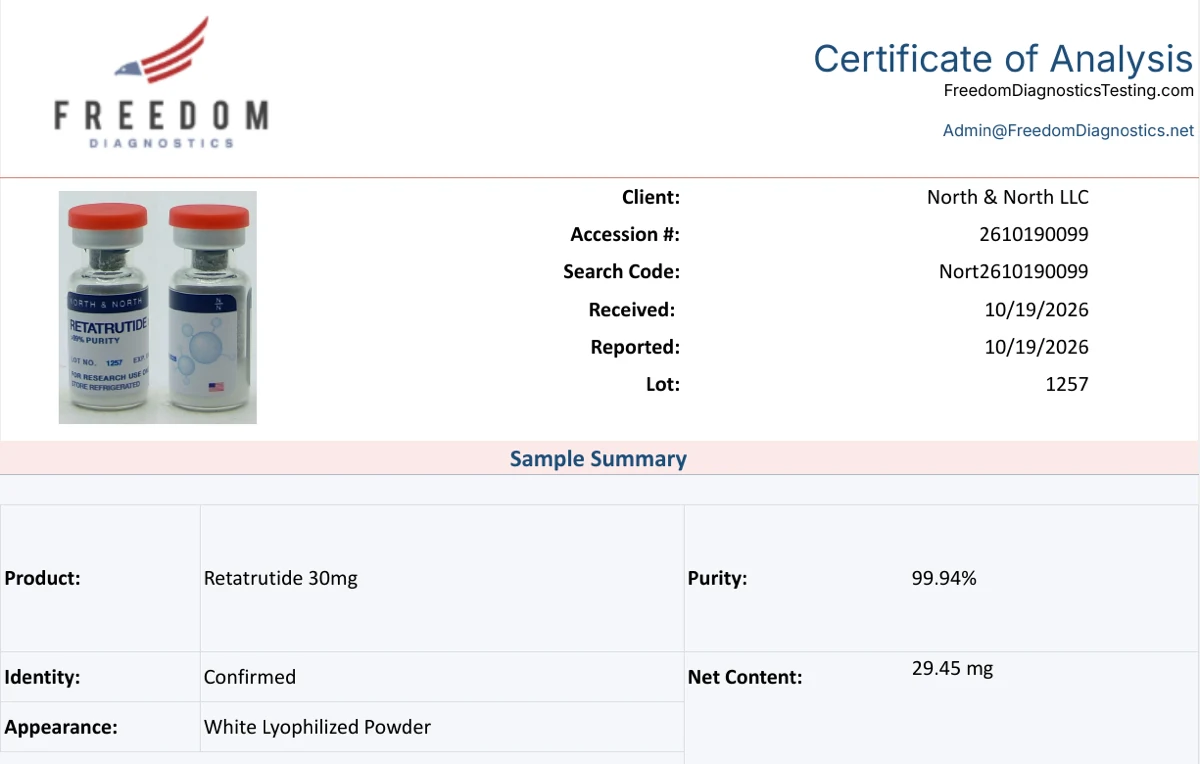
A certificate of analysis is a laboratory’s record of what it found in one lot of one product. Four lines carry most of the weight: the lot number, the purity, the identity and the amount in the vial. This guide walks through each one, using a real certificate from our own catalog.
Why it matters
Proof, lot by lot.
A certificate turns a label into a measurement.
Anyone can print a purity figure on a vial. A certificate from an independent laboratory ties that figure to a specific lot, a specific method and a specific report number you can check. That is what makes it worth reading closely.
Line one
Start with the lot.
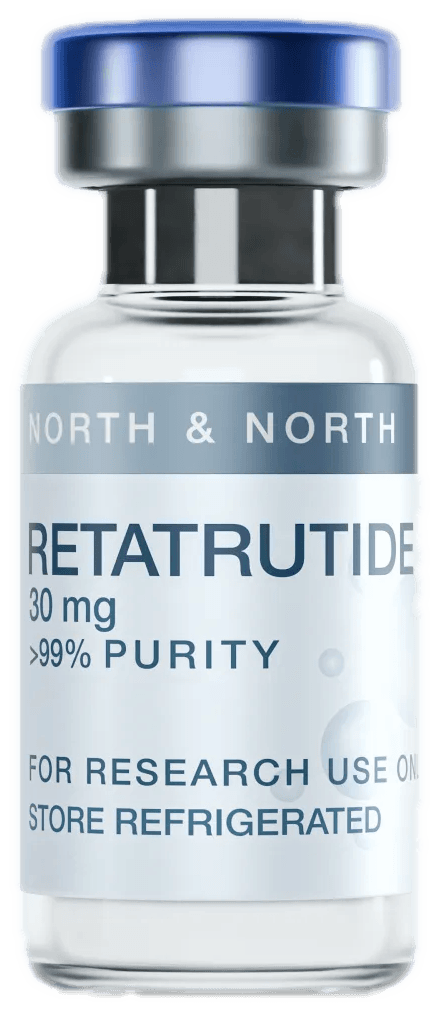
Every certificate covers one lot, the batch a vial was filled from. The lot number on the certificate should match the lot number on your vial. A matching lot ties the report to your vial’s batch.
Our example: Retatrutide 30mg, lot 1257.
Line two
Purity is a percentage of the peaks.
High performance liquid chromatography, or HPLC, separates a sample into its parts and measures each one as a peak. Purity is the target peptide’s share of the total peak area the instrument recorded. A result above 99% means the compound on the label accounts for more than 99% of it.
Our example: 99.94% by HPLC.
Line three
Identity is a matching mass.
Mass spectrometry measures the mass of the molecules in a sample. Every peptide has a mass that follows from its sequence, so a measured mass that matches the expected one is the evidence behind the identity result. Purity tells you how clean a sample is; identity tells you what it is. A strong certificate reports both.
Our example: identity confirmed by mass spectrometry.
Line four
How much is really in the vial.
The content line is the amount of peptide the lab measured in the vial, in milligrams, set against the amount on the label. It answers a different question from purity: purity is how clean the material is, content is how much of it there is.
Our example: 29.45 mg measured in a vial labelled 30 mg.
The details
Who tested it, and when.
- The laboratory’s name, so you know the testing was independent.
- A report number, unique to that certificate.
- The date the results were reported.
- Appearance, a plain description of the material. In our example, a white freeze dried powder.
Our example: Freedom Diagnostics Testing, report 2610190099, reported October 19, 2026.
Certificate of analysis
Retatrutide 30mg · lot 1257
- Purity
- 99.94% by HPLC
- Identity
- Confirmed by mass spectrometry
- Net content
- 29.45 mg of a 30 mg label
- Tested by
- Freedom Diagnostics Testing
- Report
- 2610190099 · October 19, 2026
Independent results for the lot listed. Research material only.
Reading any certificate
Five things to look for.
- A lot number that matches the vial.
- Purity by HPLC, stated as a percentage.
- An identity result from mass spectrometry.
- Content per vial, in milligrams.
- An independent laboratory, a report number and a date.
Common questions
Questions people ask.
What does 99% purity mean for a peptide?
It means the target peptide accounts for at least 99% of the peak area recorded in the HPLC test. It is a measure of how clean the material is.
Is purity the same as the amount in the vial?
No. Purity describes how clean the material is. Content per vial describes how much peptide is there, in milligrams. A good certificate reports both.
What does mass spectrometry confirm?
That the sample’s measured mass matches the mass the peptide’s sequence calls for. That match is the evidence behind the identity result on a certificate.
Does one certificate cover every vial?
It reports on a sample tested from the lot it names, the batch those vials were filled from. That is why the lot number on the certificate and on the vial should match.
Where can I see the certificate for my vial?
Certificates we have published are linked on the compound’s page, as the laboratory issued them.